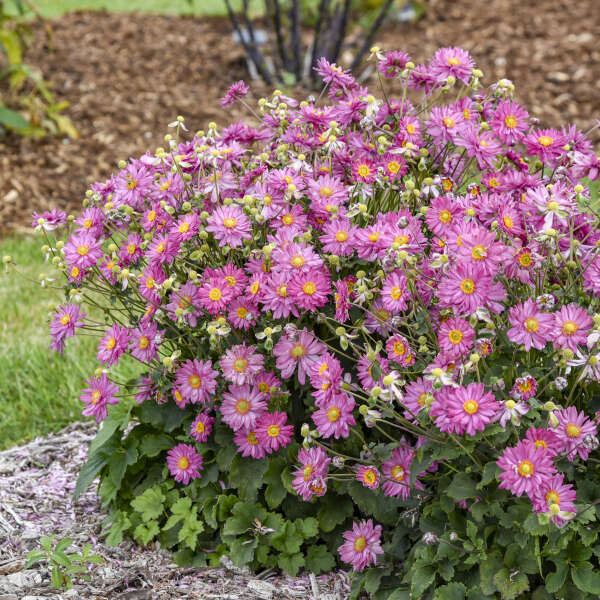
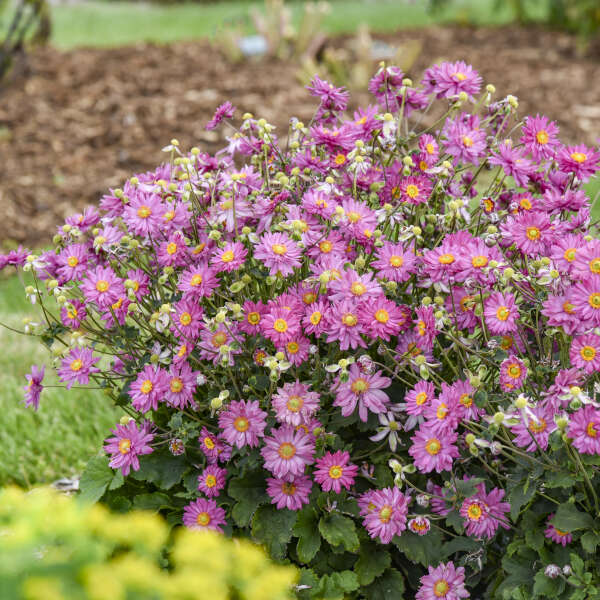
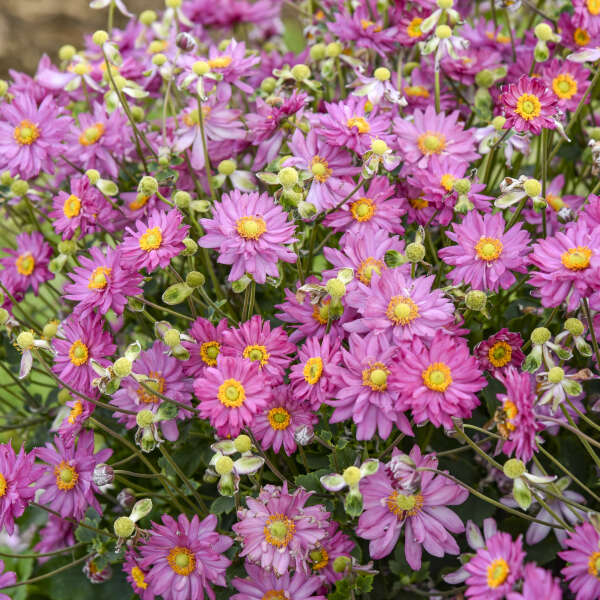
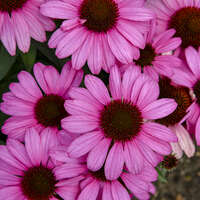
FALL IN LOVE® 'Deeply' brings deep rose-pink blooms to the late summer and early fall garden. Sharing the same bloom time as 'Sweetly', this variety stands out with its darker flower color and refined, restrained habit. Unlike more aggressive Japanese Anemones, 'Deeply' spreads slowly through rhizomes, making it a well-behaved choice for mixed borders.
Thriving in sun to filtered shade, this variety is ideal for those tricky lighting spots in the garden. Its graceful blooms and tidy habit make it a standout for woodland edges, cottage gardens, or shaded perennial beds.
A staple item for late summer and fall borders, Japanese Anenomes are graceful plants with beautiful, satiny flowers borne on tall stems above a clump of shorter basal foliage. Watching them sway in the breeze brings a feeling of calm and peace to the garden. Since they are a bit late to rise in the spring, they make an ideal cover for the dying foliage of spring bulbs.
30ct Plug Tray |
72ct Plug Tray |
Height:
20.0-26.0 Inches
Spread:
24.0-30.0 Inches
Hardiness Zones:
4,5,6,7,8
Flower Color:
Pink shades
Foliage Color:
Green shades
Sunlight:
Full Sun (> 6 hrs. Direct Sun) Part Shade (4-6 hrs. Direct Sun)
Water Requirements:
Average Water Needs Consistent Water Needs
Soil Quality:
Average Soil Quality Fertile Soil Quality
Soil Chemistry:
Acidic Soil (pH < 7.0) Neutral Soil (pH = 7.0) Alkaline Soil (pH > 7.0)
Bloomtime:
Late Summer Early Fall
Attracts Wings:
Attracts Butterflies
Critter Resistant:
Deer Resistant Rabbit Resistant
Seasonal Interest:
Fall Color
Growth Rate:
Medium
Garden Style:
Cottage Eclectic
Other Features:
Border Plant Cut Flower Mass Planting Focal Point
Origin:
Not Native to North America
Japanese anenomes are easy to grow when properly sited. In cooler climates, they can be grown in full sun if a consistant supply of moisture is available. In warmer zones, they need protection from the hot, midday sun; dappled shade is ideal. Plant them in rich, loose, well-drained soil. Dry or excessively wet soil and windy conditions are a sure downfall of this plant.
This perennial spreads by means of creeping rhizomes, and new plants may appear near the original clump in the spring. They are easily transplanted if they show up where they are not wanted. This should be done in the spring. Make sure to provide a heavy mulch in the fall the first two seasons to prevent frost heaving.
Deer and rabbits typically don't bother this plant and it has no serious pest or disease issues.
Container:
Premium 1 Gallon Pot
When to Plant:
Late winter to spring
Finish:
6-8 weeks
Container:
Premium 1 Gallon Pot
When to Plant:
Late winter to spring
Finish:
10-12 weeks
Container:
Trade 1 Gallon Container
When to Plant:
Late winter to spring
Finish:
8-10 weeks
Growing Temperature:
60-65° F
Holding Temperature:
50-60° F
Soil PH:
5.8-6.4
EC (What is EC?):
1.5-2.5 pour through method
Fertility:
Feed 75-125 ppm N at each irrigation. Flush the growing medium with clear water every third or fourth irrigation.
\r\n\r\nFor Controlled Release or Slow Release Fertilizer, see your preferred supplier for recommended rates for incorporation or top dressing, as it varies by fertilizer.
Vernalization:
Cold beneficial 11-15 weeks below 40° F.
Pests & Diseases:
Aphids, thrips, fungus gnats and foliar nematodes
Rhizoctonia, Pythium. Leaves are sensitive to pesticide sprays and have been known to develop leaf curl following spray applications of some sprays, so trial first. Anemone roots are naturally brownish-yellow and consequently may appear diseased when they are not.
Potting & Timing:
Plants should be adequately spaced to be able to develop properly.
Moisture:
Anemone prefer to have consistant moisture. Avoid allowing plants to dry out.
Planting Level:
Crown level even with soil line.
PGRs/Pinching:
PGRs are not necessary if plants are grown under proper conditions.
Lighting:
Long days required for flowers.
Pruning/Trimming:
Removing early flowers can help promote more uniform growth.
Grower Tips:
Do not apply Mural fungicide (active ingredients Azoxystrobin and Benzovindiflupyr) to Anemone as it may cause leaf curl.
Height:
20.0-26.0 Inches
Spread:
24.0-30.0 Inches
Hardiness Zones:
4,5,6,7,8
Flower Color:
Pink shades
Foliage Color:
Green shades
Sunlight:
Full Sun (> 6 hrs. Direct Sun) Part Shade (4-6 hrs. Direct Sun)
Water Requirements:
Average Water Needs Consistent Water Needs
Soil Quality:
Average Soil Quality Fertile Soil Quality
Soil Chemistry:
Acidic Soil (pH < 7.0) Neutral Soil (pH = 7.0) Alkaline Soil (pH > 7.0)
Bloomtime:
Late Summer Early Fall
Attracts Wings:
Attracts Butterflies
Critter Resistant:
Deer Resistant Rabbit Resistant
Seasonal Interest:
Fall Color
Growth Rate:
Medium
Garden Style:
Cottage Eclectic
Other Features:
Border Plant Cut Flower Mass Planting Focal Point
Origin:
Not Native to North America
Japanese anenomes are easy to grow when properly sited. In cooler climates, they can be grown in full sun if a consistant supply of moisture is available. In warmer zones, they need protection from the hot, midday sun; dappled shade is ideal. Plant them in rich, loose, well-drained soil. Dry or excessively wet soil and windy conditions are a sure downfall of this plant.
This perennial spreads by means of creeping rhizomes, and new plants may appear near the original clump in the spring. They are easily transplanted if they show up where they are not wanted. This should be done in the spring. Make sure to provide a heavy mulch in the fall the first two seasons to prevent frost heaving.
Deer and rabbits typically don't bother this plant and it has no serious pest or disease issues.
Container:
Premium 1 Gallon Pot
When to Plant:
Late winter to spring
Finish:
6-8 weeks
Container:
Premium 1 Gallon Pot
When to Plant:
Late winter to spring
Finish:
10-12 weeks
Container:
Trade 1 Gallon Container
When to Plant:
Late winter to spring
Finish:
8-10 weeks
Growing Temperature:
60-65° F
Holding Temperature:
50-60° F
Soil PH:
5.8-6.4
EC (What is EC?):
1.5-2.5 pour through method
Fertility:
Feed 75-125 ppm N at each irrigation. Flush the growing medium with clear water every third or fourth irrigation.
\r\n\r\nFor Controlled Release or Slow Release Fertilizer, see your preferred supplier for recommended rates for incorporation or top dressing, as it varies by fertilizer.
Vernalization:
Cold beneficial 11-15 weeks below 40° F.
Pests & Diseases:
Aphids, thrips, fungus gnats and foliar nematodes
Rhizoctonia, Pythium. Leaves are sensitive to pesticide sprays and have been known to develop leaf curl following spray applications of some sprays, so trial first. Anemone roots are naturally brownish-yellow and consequently may appear diseased when they are not.
Potting & Timing:
Plants should be adequately spaced to be able to develop properly.
Moisture:
Anemone prefer to have consistant moisture. Avoid allowing plants to dry out.
Planting Level:
Crown level even with soil line.
PGRs/Pinching:
PGRs are not necessary if plants are grown under proper conditions.
Lighting:
Long days required for flowers.
Grower Tips:
Do not apply Mural fungicide (active ingredients Azoxystrobin and Benzovindiflupyr) to Anemone as it may cause leaf curl.
About Us •
Contact Us •
Proven Winners ® •
Perennials •
Ordering •
Availability •
Resources •
Cultural Info •
Video
1992 96th Ave. Zeeland, MI. • P.O. Box 137
www.waltersgardens.com • www.perennialresource.com • www.provenwinners.com
sales@waltersgardens.com • 1-800-WALTERS • Privacy Notice