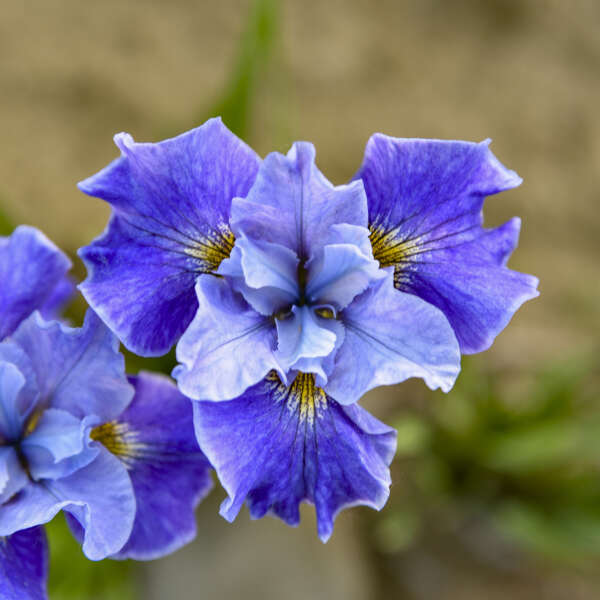
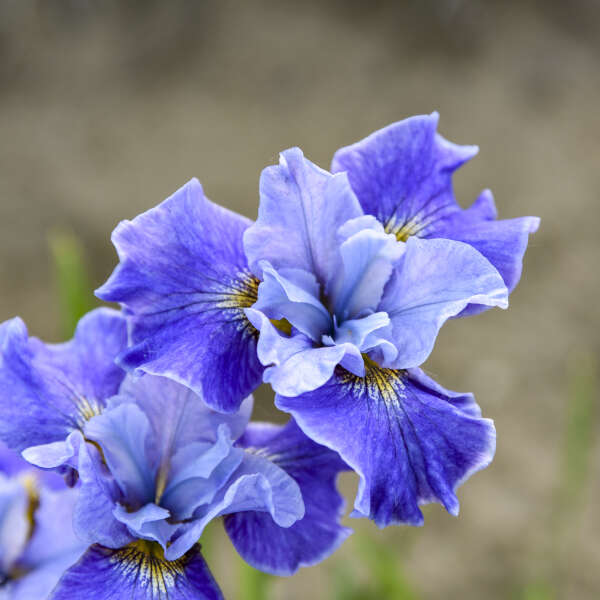
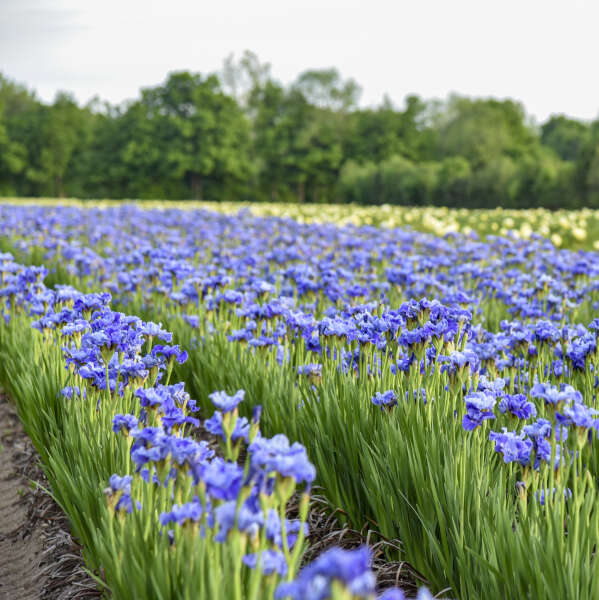
\'Tutu Blue\' is an exceptionally vigorous Siberian Iris, boasting an abundance of lush, substantial foliage. It produces a profusion of ruffled, periwinkle blue flowers, creating a striking display. With its hardy nature and prolific blooming, \'Tutu Blue\' is an excellent addition to any garden, adding both color and texture.
Siberian irises are haled for their elegant, delicate flowers and disease resistance. They perform admirably in the sunny to partially shady garden, but need plenty of water throughout the season to continue looking their best. In naturalized settings, they are particularly effective around water features. They can also be grown under Black Walnut trees since they are not effected by juglone. Siberian Irises bloom before Japanese Irises but after Tall Bearded Irises.
Grade #1 Bare Root |
Grade #2 Bare Root |
Height:
27.0-32.0 Inches
Spread:
18.0-24.0 Inches
Hardiness Zones:
3,4,5,6,7,8,9
Flower Color:
Blue shades
Foliage Color:
Green shades
Sunlight:
Full Sun (> 6 hrs. Direct Sun) Part Shade (4-6 hrs. Direct Sun)
Water Requirements:
Average Water Needs Consistent Water Needs
Soil Quality:
Average Soil Quality
Soil Chemistry:
Acidic Soil (pH < 7.0) Neutral Soil (pH = 7.0)
Bloomtime:
Early Summer
Attracts Wings:
Attracts Hummingbirds Bee Friendly
Critter Resistant:
Deer Resistant Rabbit Resistant
Growth Rate:
Medium
Garden Style:
Cottage Eclectic Rain Garden Woodland Shade
Other Features:
Border Plant Cut Flower Mass Planting Specimen Focal Point Fire Resistant
Origin:
Not Native to North America
Siberian Irises are among the easiest and most trouble-free species to grow in their genus. They prefer full sun, though they will tolerate part shade especially in warmer zones. Plant in rich, moist soil that is moderately acidic (5.2-6.4). Deadheading this variety will not prolong its bloom.
\r\n\r\nIt is best to leave these irises untouched until there is a noteable lessening of blooms. At that time, they may be divided, preferably in the fall but also in the spring. New clumps may take two or three years to become firmly established, at which time they will begin to bloom profusely. According to Steven Still, Siberian Irises are the best species of Iris for the south.
Height:
27.0-32.0 Inches
Spread:
18.0-24.0 Inches
Hardiness Zones:
3,4,5,6,7,8,9
Flower Color:
Blue shades
Foliage Color:
Green shades
Sunlight:
Full Sun (> 6 hrs. Direct Sun) Part Shade (4-6 hrs. Direct Sun)
Water Requirements:
Average Water Needs Consistent Water Needs
Soil Quality:
Average Soil Quality
Soil Chemistry:
Acidic Soil (pH < 7.0) Neutral Soil (pH = 7.0)
Bloomtime:
Early Summer
Attracts Wings:
Attracts Hummingbirds Bee Friendly
Critter Resistant:
Deer Resistant Rabbit Resistant
Growth Rate:
Medium
Garden Style:
Cottage Eclectic Rain Garden Woodland Shade
Other Features:
Border Plant Cut Flower Mass Planting Specimen Focal Point
Origin:
Not Native to North America
Siberian Irises are among the easiest and most trouble-free species to grow in their genus. They prefer full sun, though they will tolerate part shade especially in warmer zones. Plant in rich, moist soil that is moderately acidic (5.2-6.4). Deadheading this variety will not prolong its bloom.
\r\n\r\nIt is best to leave these irises untouched until there is a noteable lessening of blooms. At that time, they may be divided, preferably in the fall but also in the spring. New clumps may take two or three years to become firmly established, at which time they will begin to bloom profusely. According to Steven Still, Siberian Irises are the best species of Iris for the south.
About Us •
Contact Us •
Proven Winners ® •
Perennials •
Ordering •
Availability •
Resources •
Cultural Info •
Video
1992 96th Ave. Zeeland, MI. • P.O. Box 137
www.waltersgardens.com • www.perennialresource.com • www.provenwinners.com
sales@waltersgardens.com • 1-800-WALTERS • Privacy Notice